

ASEAN-IPR WPS Training Programme Module 3.5: Strengthening WPS Implementation Through The YPS Agenda
10-12 February 2026
Jakarta, Indonesia
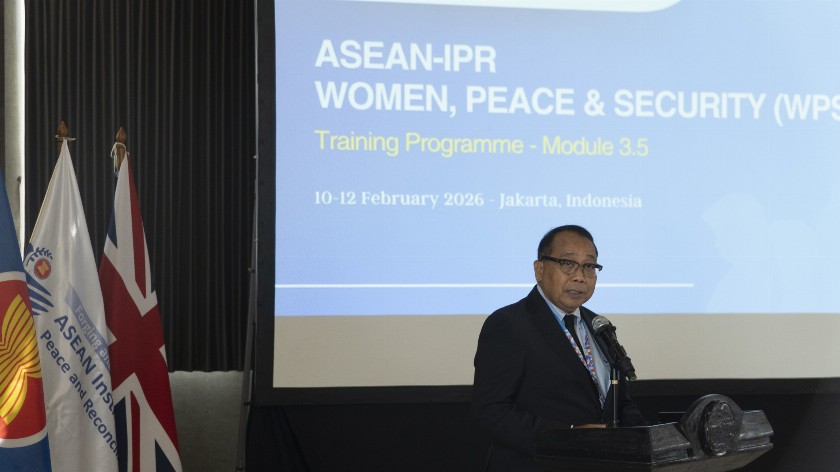
In an era of increasingly complex threats to peace, the success of peace agendas depends fundamentally on partnerships and collaboration. This was underscored during the opening of the latest iteration of the ASEAN Institute for Peace and Reconciliation (ASEAN-IPR) Women, Peace and Security (WPS) Training Programme by Mr. I Gusti Agung Wesaka Puja, the Institute’s Executive Director (ED). In his remarks, the ED highlighted that the WPS Agenda remains a critical political imperative. Its future relevance and success, he underlined, hinge on reaching new audiences across generations, noting that “synergy with the Youth, Peace and Security (YPS) Agenda is key. Acknowledging and enabling the meaningful participation of young people is essential for renewing and sustaining our peacebuilding efforts.”
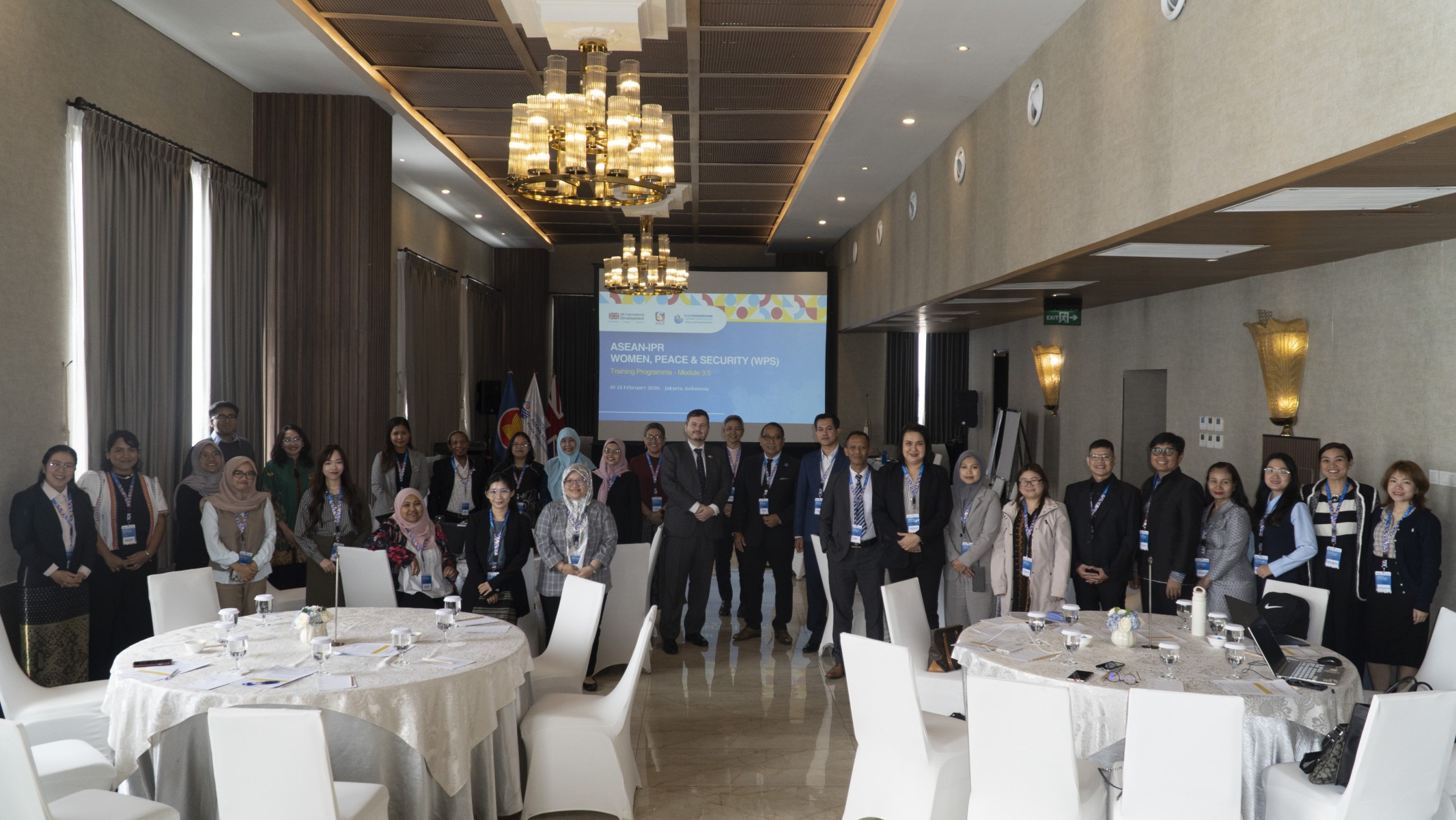
Building on this vision, the ASEAN-IPR WPS Training Programme Module 3.5: Strengthening WPS Implementation through the YPS Agenda was successfully convened in Jakarta, Indonesia on 10-12 February 2026. This final pilot module adopted a novel approach by intentionally bringing together twenty-four (24) participants from diverse backgrounds—including government officials, civil society representatives, think-tank researchers, and youth leaders—to foster integrated discussions and share real-world experiences in policy processes. The Training aimed to bridge top-down and bottom-up approaches, emphasising shared advocacy and partnership between governments and civil society for mainstreaming women and youth priorities into peace and security policies in the region. A key added value was honing participants' technical skills to analyse and draft inclusive policy recommendations that integrate WPS and YPS agendas into existing national efforts.
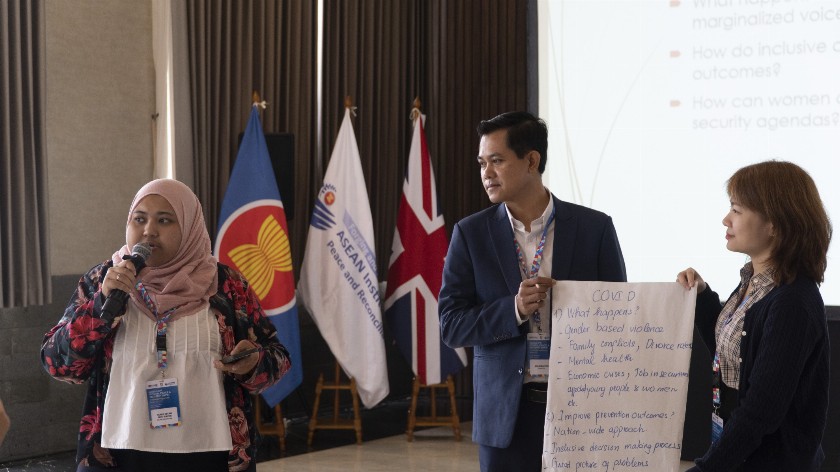
The three-day programme was structured to build knowledge and practical skills progressively. Day One set the foundation by examining the regional and global landscape affecting peace in ASEAN, including non-traditional security challenges. Facilitated by Dr. Debbie Affianty of Universitas Muhammadiyah Jakarta, the session reinforced the need for intersectional and inclusive approaches to conflict response.
The Training's timing also held special significance, coinciding with the fifth anniversary of the UK-ASEAN Dialogue Partnership. This milestone lent momentum to critical reflections on women's participation in policy and decision-making processes. In his opening remarks, Mr. Ben Matthews, Deputy Head of Mission and Political-Security Counsellor at the UK Mission to ASEAN, framed this reflection with pointed questions: “Have we achieved equality? Have we done enough?” He followed these questions with a clear conviction, stating that “women’s participation broadens community engagement, leads to more inclusive outcomes, and strengthens post-conflict recovery.”
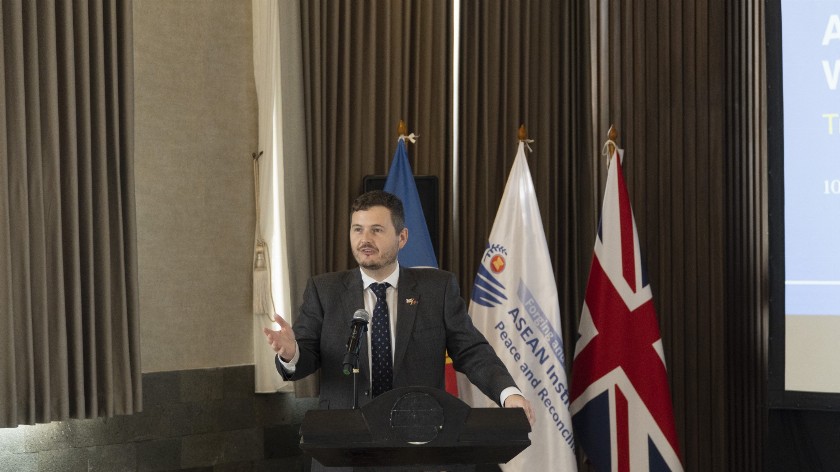
The day continued with an introduction to the YPS Agenda and its integrated implementation with WPS, led by Rene A. Gandeza Jr. from the Philippine Office of the Presidential Adviser on Peace, Reconciliation and Unity (OPAPRU). The first day concluded with a foundational workshop on policy analysis by Gender, Equality, Disability and Social Inclusion (GEDSI) Consultant Maricel Aguilar, where participants analysed their national policies to identify gaps affecting women and youth.
Organising participants into their respective country groups presented both a challenge and a significant opportunity. This structure fostered essential dialogue and allowed for a two-way exchange of lessons learned between government and civil society representatives. Through this collaborative process, each group worked to finalise a set of shared, mutually agreed-upon policy recommendations as a core outcome of the Training.
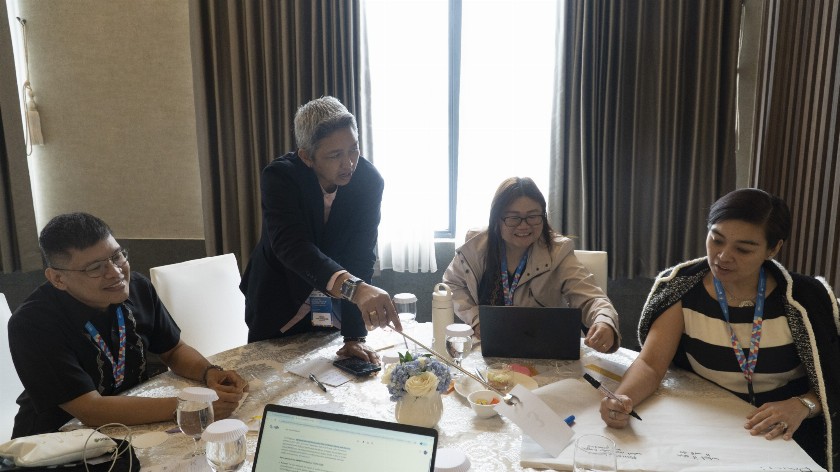
Day Two delved into operationalising gender inclusion in national peacebuilding, using WPS and YPS as tools to question power structures. A key discussion addressed the risk of treating the two agendas as separate silos, which can marginalize young women and other vulnerable groups. Trainers clarified that YPS is often misunderstood as mere "youth programming," rather than recognising youth as a rights-bearing political constituency. The day emphasised that intergenerational partnership is crucial for designing accountable decision-making structures. The final session tasked participants with mapping key stakeholders in their respective countries, emphasising its interest and influence levels to the decision-making process.
Day Three was dedicated to a technical workshop on Policy Lab. Participants translated the identified gaps from their analyses into clear, feasible policy recommendations and advocacy strategies. The Training culminated with country groups presenting their policy recommendation briefs, designed to be shared directly with national decision-makers. The successful conclusion of Module 3.5 marked a significant step in fostering the intergenerational and inclusive collaboration essential for sustaining peace and security in the ASEAN region.
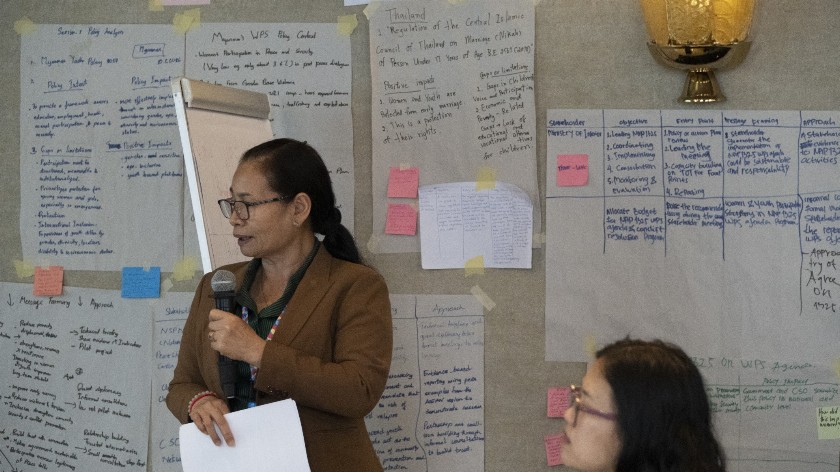
This intensive Training Programme was made possible by the generous support of the Foreign, Commonwealth & Development Office (FCDO) through the UK Mission to ASEAN. ASEAN-IPR would also like to acknowledge the module’s Trainers and Experts: Ms. Bianca Pabotoy (Lead Facilitator/Trainer), Dr. Debbie Affianty, Rene A. Gandeza Jr., and Ms. Maricel Aguilar.